In her role as Head of Modern and Contemporary South Asian Art at Sotheby’s, Manjari Sihare-Sutin has become agnostic when it comes to time zones. “Our field is so global. My day often begins with India, shifts to the United Kingdom by midday, and ends with the United States.”
It tracks that Sihare-Sutin has adapted to working across a broad geographic terrain. “In between are endless calls, valuations, research, and the privilege of handling extraordinary works of art. Every day brings a new puzzle to solve, a new story to uncover,” says Sihare-Sutin.
“As specialists, we’re custodians of people’s stories and legacies,” she adds. “For Indian and South Asian communities, art has helped reclaim and redefine an identity that was once narrated by external perspectives.”
India’s art market is in the midst of an explosive, global breakout moment. According to reporting in the BBC, auction turnover in India more than doubled in just two years, from around US $41 million in 2020 to a whopping US $92 million by 2022. Domestic demand for South Asian art continues to surge, and collectors are being turned onto new arts fairs in the region. This, when paired with huge wins—like Tyeb Mehta’s Trussed Bull 1956 selling for US $7.27 million, nearly nine times its highest estimate—a growing consortium of insiders speculate that the market for Indian art may expand to US $1.1 billion by 2030.
Growing up in an art-loving family in India, museums were Sihare-Sutin’s playground. She spent her childhood wandering through galleries, gradually developing intimate perspectives on how the art she encountered shed insights on light, texture, and history. “That early balance of instinct and scholarship still guides me at Sotheby’s,” she says from New York. “To look deeply, connect emotionally, and place each work within its larger narrative.”
For Sihare-Sutin, her eye for emerging artists is equally guided by tending to this balance. “We’re all living through a time when cultures, histories, and influences are constantly in motion,” she says. “Artists, like all of us, are shaped by this flux, and their work often reflects that complexity far beyond geography or identity.”
When asked to name South Asian artists making their mark, she highlights three who are trailblazing in their own disciplines.
Varunika Saraf, painter
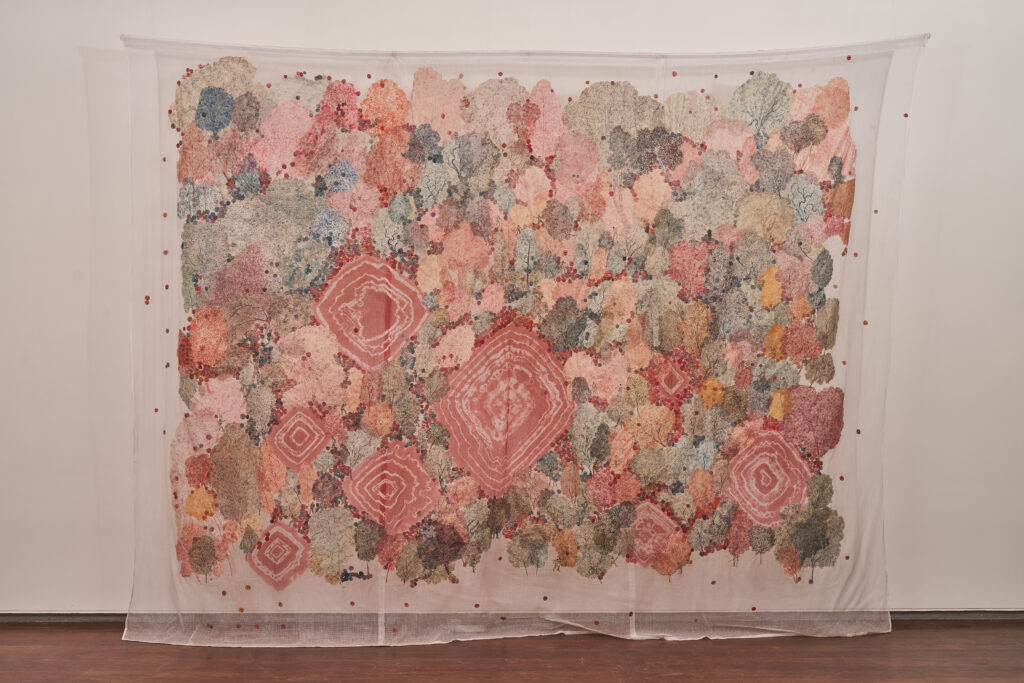
Hyderabad-based artist and art historian Varunika Saraf creates paintings that double as historical archives and political interventions. Working primarily in the medium of “wasli,” a surface rooted in Mughal miniature traditions, she handcrafts custom-made pigments from both natural and synthetic materials, embedding each with embroidery, collage, and block-printing.
Beyond the studio, Saraf’s doctoral research on Indian miniatures reshaped debates about authenticity, fakes, and cultural heritage. Confronting the rise of violence and the fault lines of power, her surfaces simultaneously dazzle and unsettle. “Varunika’s paintings bring together the intricate language of miniature traditions with urgent contemporary narratives,” Sihare-Sutin describes. With exhibitions spanning Kochi to Sharjah to San Francisco, and accolades including the 2023 Asia Society Game Changer Award, she is emerging as one of India’s most incisive cultural voices.
Saraf’s We, The People, a hand-embroidered collection of 76 works that map collective memory and history with intentional gaps that represent how incomplete the telling of history is. This piece of work received Honourable Mention at the Sharjah Biennial 15. Saraf’s What Lurks Here, a watercolour on paper pasted on cotton textile, has also garnered attention.
Sakshi Gupta, sculptor
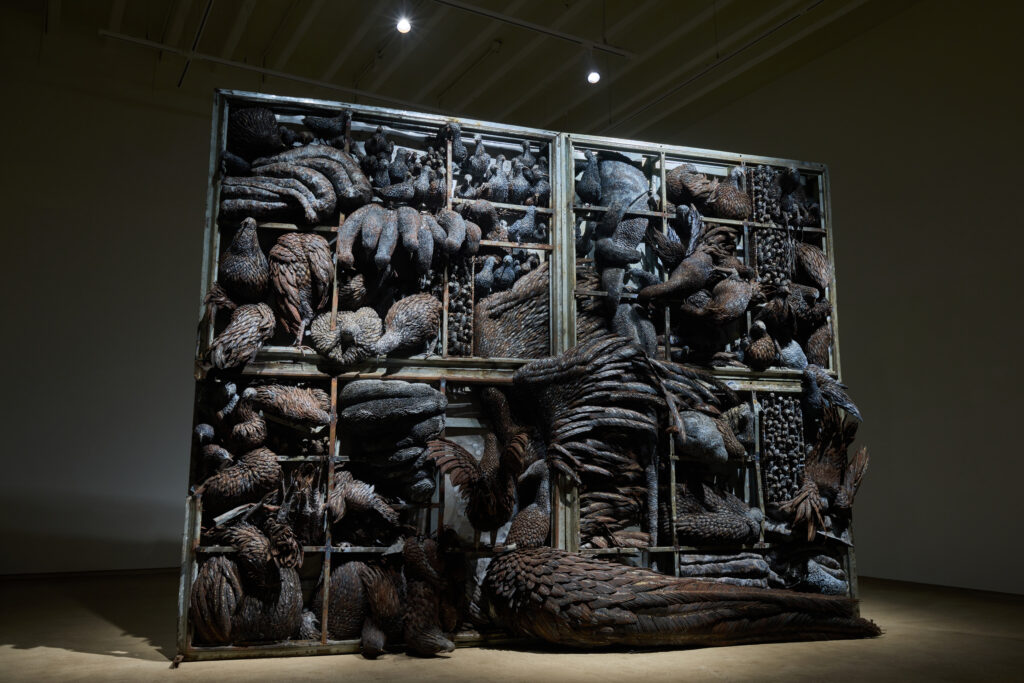
If Saraf’s canvases peer beneath the surface of political fragility, Sakshi Gupta’s sculptures platform the tension between the material and sensorial world. Based in Delhi, Gupta transforms discarded industrial materials, steel, scrap, and mechanical parts into sculptures that showcase her fascination with the processes of decay and renewal. For Sihare-Sutin, Gupta’s work is capable of reimagining machinery to evoke human gestures. “Sakshi transforms industrial materials with striking sensuality, balancing strength and vulnerability in her sculptures,” explains Sihare-Sutin.
Gupta’s career has spanned continents, with solo shows at Experimenter, Mumbai (If The Seas Catch Fire, 2023) and Galerie Krinzinger, Vienna (2017), alongside landmark group exhibitions at the Centre Pompidou in Paris and Biennale Jogja in Indonesia. Recognition followed, with an impressive Visiting Artist Fellowship at Harvard in 2019, followed by building an installation for the British Council’s London headquarters during a virtual residency in 2020.
Get the
Three from 3
newsletter
Join our global community of sharp, curious thinkers to receive a carefully curated email of the three most important things to read, see and do this week.
Listen and learn.
Tune into Third Culture Leaders, a podcast hosted by our co-founder and publisher, Muraly Srinarayanathas.
Explore how leaders skillfully navigate multiple cultural landscapes, leveraging their diverse backgrounds to drive innovation and change.
One of Gupta’s pieces, Landscape of Waking Memories (2007)—featuring galvanized wire, mesh, and chicken feathers—is just one of many intriguing works. The piece challenges perspective and encourages the viewer to take the work in from different viewpoints.
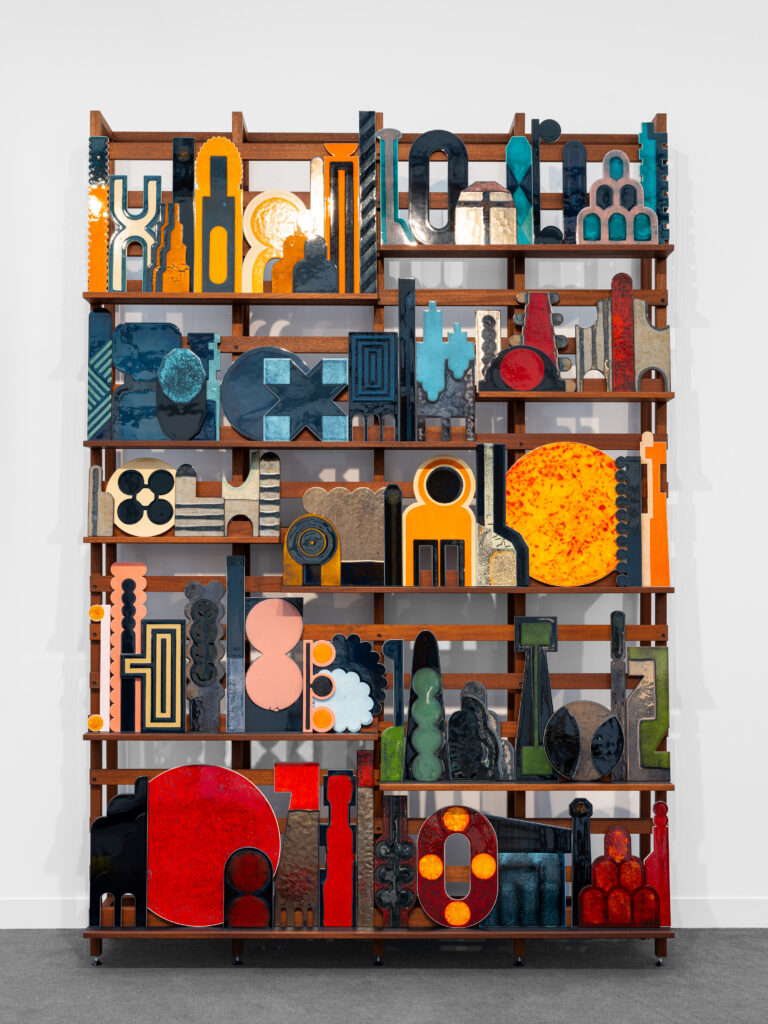
Lubna Chowdhary, ceramicist
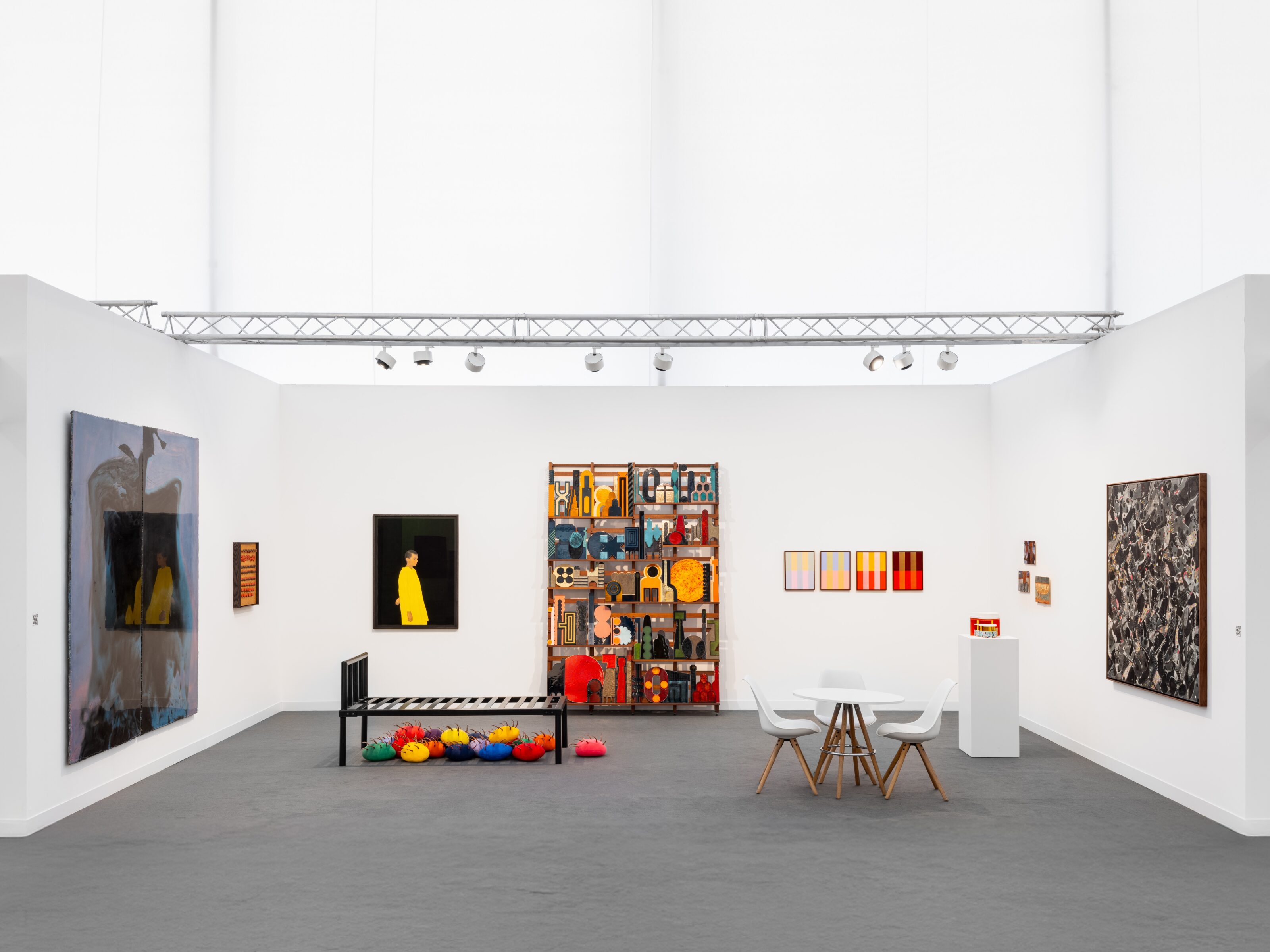
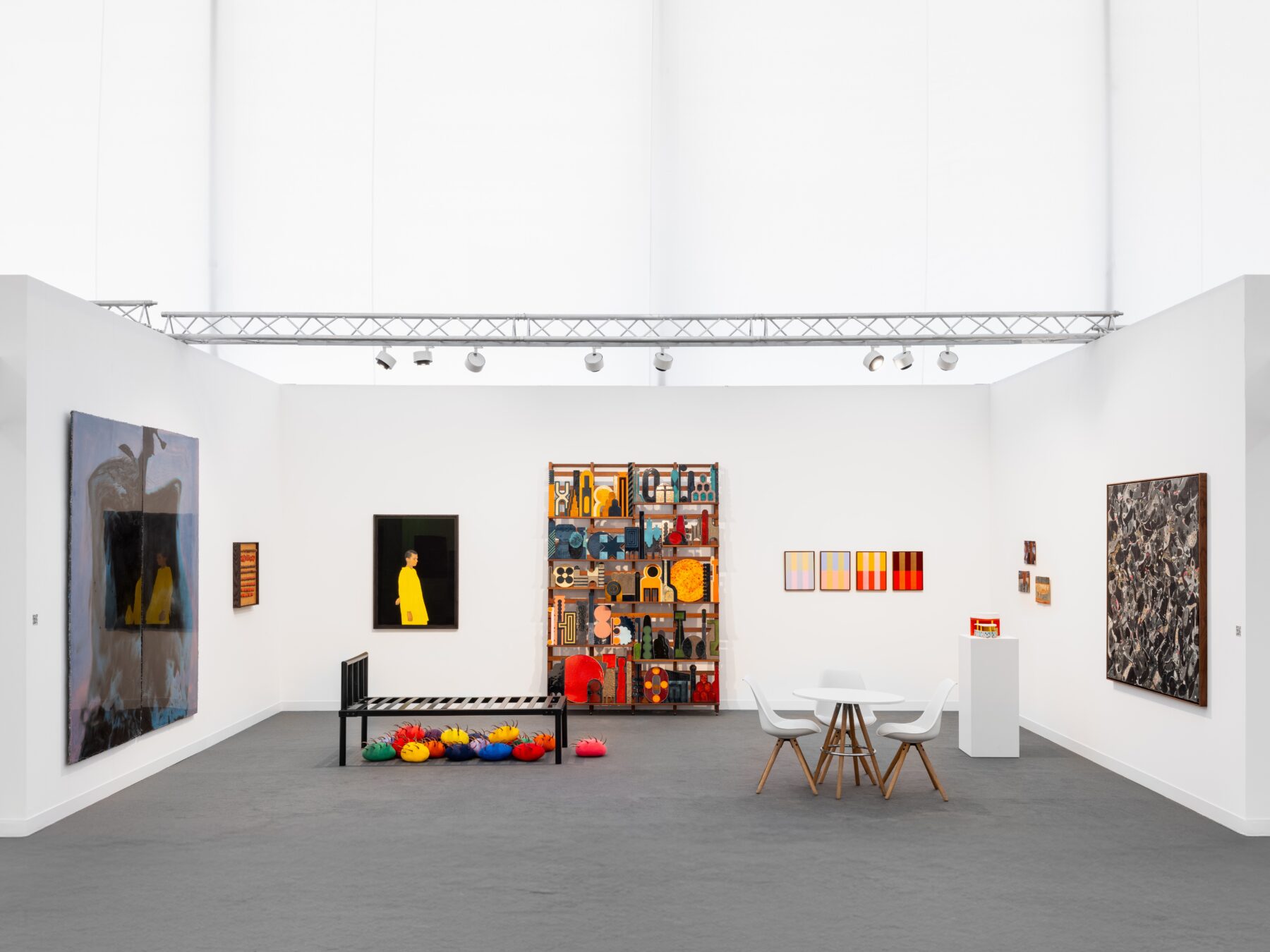
When placed in Lubna Chowdhary’s hands, clay becomes a tool of subversion. Born in Tanzania to Pakistani parents and raised in Britain, Chowdhary creates ceramics that harness abstraction to probe the limits of urbanization through sculptural objects and installations. A graduate of the Royal College of Art, early in her career she won the acclaimed Sir Eduardo Paolozzi Travel Award. In October, the Tate Frieze Fund, which offers a team of Tate curators a budget of GBP £150,000 to purchase works for the museum’s collection, acquired Chowdhary’s sprawling ceramic piece, “Assembly.” When considering her work, Sihare-Sutin is attentive to how Chowdhary’s practice negotiates between modernity’s cross-cultural narratives imbued in design: “[Chowdhary] merges geometry, rhythm, and colour with architectural precision and quiet lyricism.”